Techniques for Texture, Light, and Visual Storytelling in Jewellery Photography
Jewellery Photography is a delicate dance between physics and poetry. On one hand, it demands absolute technical precision to capture the minute details of a finely crafted piece. On the other hand, it requires a creative soul to weave a story, to evoke a feeling of luxury, desire, and timelessness. The challenge lies in translating a three-dimensional object, with all its intricate facets, lustrous surfaces, and subtle textures, into a two-dimensional image that feels just as tangible.
Lighting Jewellery Photography
Light is the language of photography, and in the world of jewellery, it speaks volumes. The right lighting can illuminate a piece, helping define its shape, accentuating its texture, and igniting the fire within its gemstones. The entire mood of an image, from stark and modern to soft and romantic, is dictated by how light is controlled, shaped, and reflected. This involves both technical setups and a strong creative vision to decide what features of the jewellery should be the hero of the shot.
For instance, a double overhead lighting setup is a classic technique for minimising distracting reflections. By placing a bright, light-bouncing surface around the jewellery and using umbrellas to create a gentle, wrapping light, a photographer can achieve clean, even illumination that is perfect for catalogue work.
Another common approach is the 45-degree angle lighting setup. This technique often involves a primary light source positioned at a 45-degree angle to the piece, with a foam board or V-flat strategically placed on the opposite side to bounce light back, filling in shadows and adding dimension. This setup is versatile, lending itself to both crisp product shots and more atmospheric, styled scenes.
Comparing Diffused vs. Directional Light for Different Outcomes
The character of light is just as important as its position. The choice between diffused (soft) and directional (hard) light fundamentally changes the final image. Diffused light, created by shooting through a softbox, a light tent, or even on a bright but overcast day, scatters light rays to create soft, gentle shadows and minimal glare. This is ideal for pieces with highly reflective surfaces, like polished gold or platinum, where the goal is to show a smooth, unbroken lustre. It’s also incredibly effective for pearls, capturing their soft, ethereal glow without harsh hotspots.
Directional light creates sharp, defined shadows and high contrast. This hard light is a powerful tool for emphasising texture and shape. Think of a raw, uncut gemstone or a piece with intricate filigree or hammered metalwork. A single, direct light source raking across the surface will pick out every detail, creating a dramatic, tactile image that highlights the craftsmanship. Directional light can be unforgiving, but when used with intention, it adds a powerful sense of depth and form.
Common Lighting Challenges When Working with Reflective Objects
Jewellery's reflective nature makes it notoriously challenging to get done right precisely. Every surface, from a polished band to a faceted stone, acts like a tiny mirror, reflecting lights but also the camera, the photographer, and the entire studio.
The most common challenges are managing glare and eliminating unwanted reflections. A blast from an on-camera flash is almost always a mistake, as it produces a harsh, flat light that creates specular highlights and kills any sense of depth.
The solution lies in controlling the environment and the light source. Using a light tent or a large softbox creates a clean, white space for the jewellery to reflect, resulting in smooth, elegant highlights. Small, carefully placed reflectors, such as white or silver cards, can be used to bounce soft light back into specific areas, filling in dark shadows without adding another light source.
For faceted stones, sometimes the best approach is to light the background or the reflective cards around the stone, allowing the surfaces to catch that light in a controlled way.
How Lighting Impacts Gemstone Clarity and Surface Texture
Lighting directly influences how a viewer perceives the quality of a gemstone and the finish of the metal. For diamonds and other transparent stones, a combination of lighting techniques is often needed. A soft, diffused light might be used to illuminate the body of the stone, while a small, hard light source (a "kicker") can be aimed to create those brilliant flashes of fire that signal quality. The angle of this light is critical; a poorly placed light can just as easily highlight an internal inclusion, diminishing the stone's perceived clarity.
For metals, light determines texture. A soft, broad light source will make a brushed metal surface look smooth and even. A hard light source, positioned at a low angle, will accentuate the tiny grooves of that same brushed finish, giving it a more raw and industrial feel.
This technical control has a direct commercial impact. Accurate colour representation, which is heavily dependent on using colour-calibrated, high-quality lighting, is essential. When the colour of a gold alloy or a sapphire in a photo matches the real-life product, it builds trust and significantly helps in reducing product returns for online retailers.
Macro Photography and Capturing Fine Detail
Luxury is often found in the details that are too small for the naked eye to appreciate fully. This is where macro jewellery photography becomes indispensable. It’s the art of getting incredibly close, revealing the world within the world of the jewellery piece: the precise alignment of pavé-set diamonds, the maker's hallmark stamped discreetly on the inside of a band, the subtle textures of an engraved pattern.
Through macro photography, the craftsmanship, quality, and artistry that justify a piece's value are made undeniably visible. It transforms a product shot into an intimate portrait of the object itself, allowing customers to explore its every detail from their screen.
Importance of Macro Lenses and Shooting Techniques
A true macro lens is a specialised piece of equipment designed to achieve a 1:1 magnification ratio, meaning the image projected onto the camera's sensor is the same size as the subject itself. This capability goes beyond a standard lens's "close-up" function, delivering unparalleled clarity without distortion.
To leverage the power of a macro lens, specific shooting techniques are essential. First and foremost is stability. At such high magnifications, the slightest vibration from a hand-pressed shutter can result in a blurred image. A sturdy tripod is non-negotiable, and using a remote shutter release or the camera's self-timer is a standard professional practice to ensure absolute stillness during the exposure.
Depth of Field and Focus Stacking in High-End Accessories Photography
Macro photography can be difficult to capture with a shallow depth of field. When you focus on the very front of a diamond ring, the back of the band will almost certainly be soft and out of focus. While a shallow depth of field can be a beautiful artistic choice for some shots, for high-end product and accessory photography, clients often need the entire piece to be perfectly sharp.

This is achieved through a technique called focus stacking. The process involves taking multiple photographs of the same object from the exact same position, but adjusting the focus point slightly in each shot. These individual images are then merged together in post-production software like Adobe Photoshop or Helicon Focus. The software takes the sharpest parts of each photo and combines them into a single, composite image that is flawless from front to back.
A word of caution: the goal is to create a naturally sharp image, not an artificially hyper-realistic one. Over-processing can make the jewellery look flat and computer-generated, undermining the very sense of authenticity you're trying to build.
Retouching with Restraint
The photographer's work doesn't end when the shutter clicks. Post-production is the final step in polishing a jewellery image, but it must be approached with a light and expert hand. The goal of retouching luxury jewellery is to improve, not to alter. It's about presenting the most perfect version of reality while preserving the piece's natural appeal and authenticity.
Best practices involve cleaning up unavoidable imperfections like dust specks or fingerprints that are invisible to the naked eye but glaringly obvious in a high-resolution macro shot. It also includes subtle adjustments to colour balance to ensure the gold looks like gold and the sapphires are the correct shade of blue.
Contrast can be gently increased to make the details pop. The line is crossed when retouching begins to create a false impression, removing significant flaws in a stone, changing the shape of the metal, or adding artificial lens flares and sparkles. A perfectly retouched image should look like it hasn't been retouched at all, striking a delicate balance between a polished, editorial finish and the trustworthy realism that luxury consumers expect.
Conceptual Direction and Visual Storytelling
A technically perfect photograph of a necklace is one thing. An image that makes you feel the cool weight of it on your skin is another entirely. This is where conceptual direction and visual storytelling come into play. It’s the process of moving beyond simply showing what the jewellery looks like and instead conveying what it feels. Telling its history, its mood, the identity of the person who would wear it. This is where a photographer’s eye merges with an art director’s mind.
The Use of Backdrops, Props, and Styling to Elevate Visual Narrative
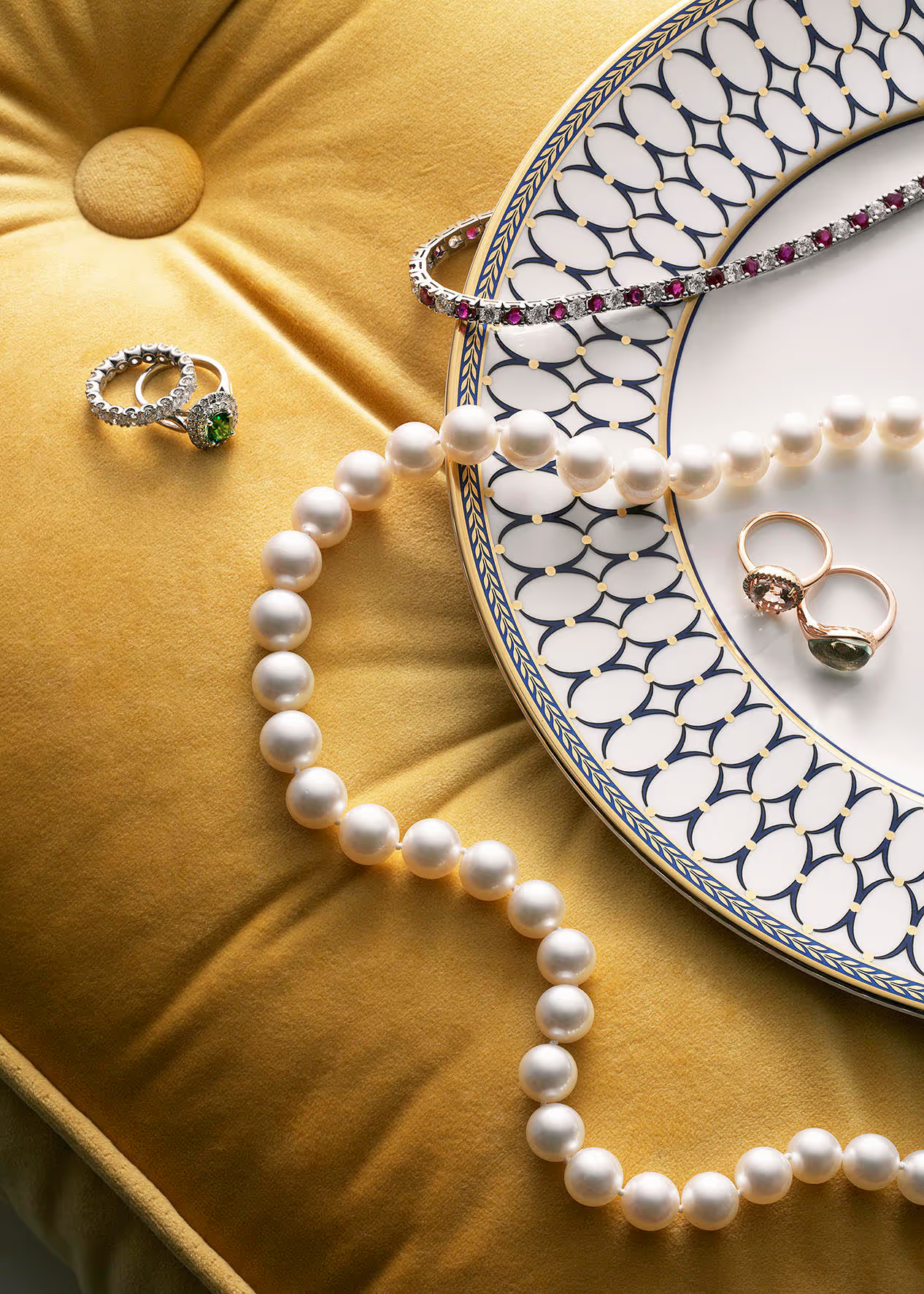
Every element within the frame contributes to the story. Backdrops, props, and styling are supporting characters that help the hero piece shine. The choice of backdrop sets the entire scene. A dark, textured surface can create a sense of drama and luxury, while a clean, bright white background communicates modernity and simplicity. Props should be chosen with intention. A single drop of water on a surface can suggest freshness and purity for a minimalist brand, while heavy, antique books might ground a heritage piece in a sense of history and intellect.
The most important rule in styling is that these elements must complement the jewellery without overshadowing it. The texture of a prop should contrast or harmonise with the texture of the metal. The colours should align with the brand’s palette and complement the tones of the gemstones. The goal is a carefully composed ecosystem where every element works together to build a compelling visual narrative, transforming a simple product shot into a piece of art that stops the scroll.
Why Texture is Everything
Mastering jewellery photography requires an obsessive appreciation for texture, the kind that controls how light behaves and how emotion is conveyed. Whether it's the cold, smooth plane of polished silver, the intricate surfaces of a diamond, or the grainy backdrop of a stone prop, every texture influences the story being told. When a photographer understands how surface, light, and mood work together, they can create images that are not only seen but felt by the viewers.
This is exactly what luxury brands need from their visual partners. They’re not just selling a product, but a standard of quality and an experience. If an image fails to capture the tactile truth of a piece, it risks undermining its value. Actual impact is created when technical precision supports artistic storytelling.
The most compelling jewellery photography sits at this intersection: technical expertise and creative direction working in lockstep. Partner with Edward Urrutia to create refined, story-led imagery that reflects your brand’s quality, craftsmanship, and vision that stands out in a crowded luxury market.